
PELASeam2
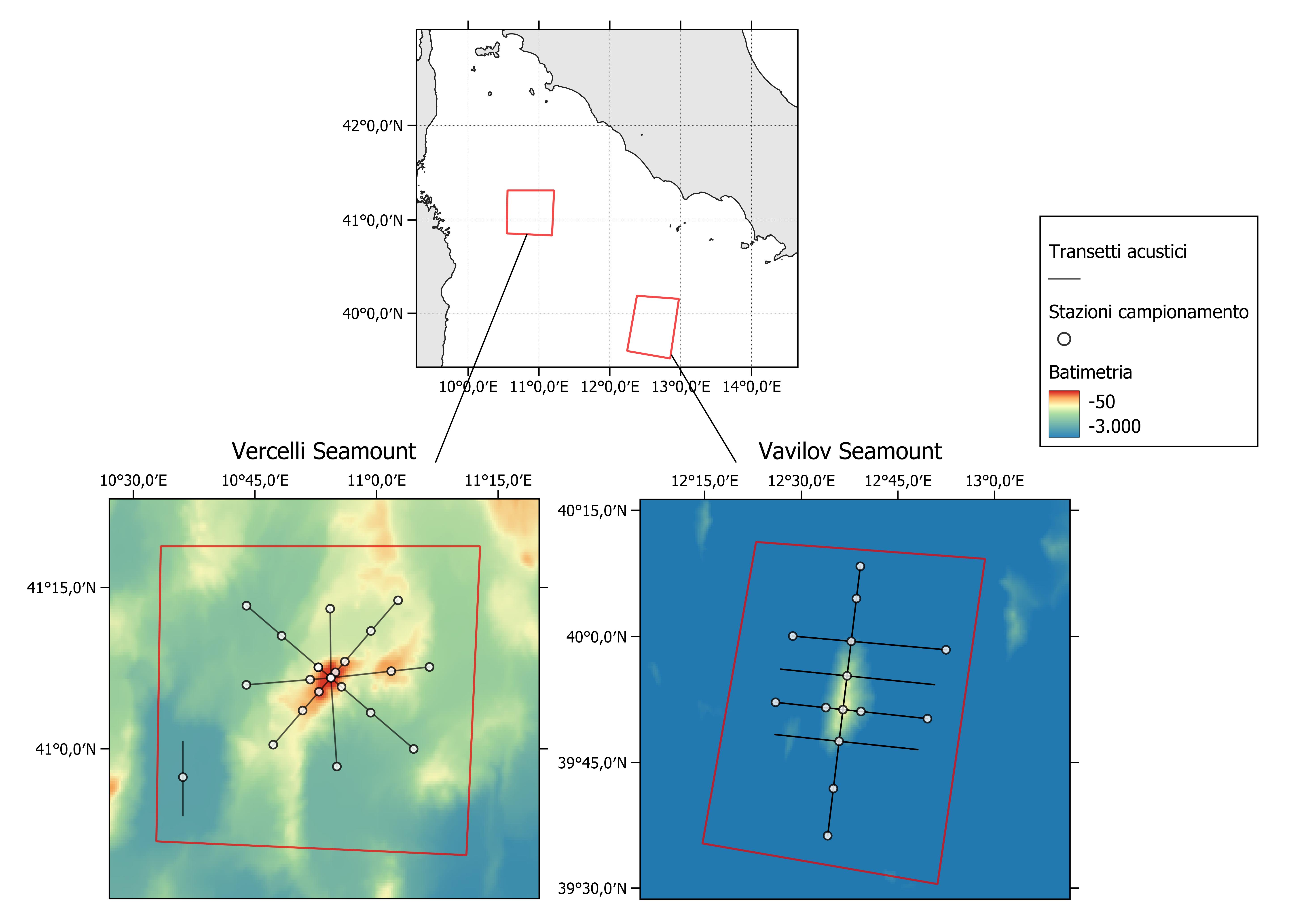
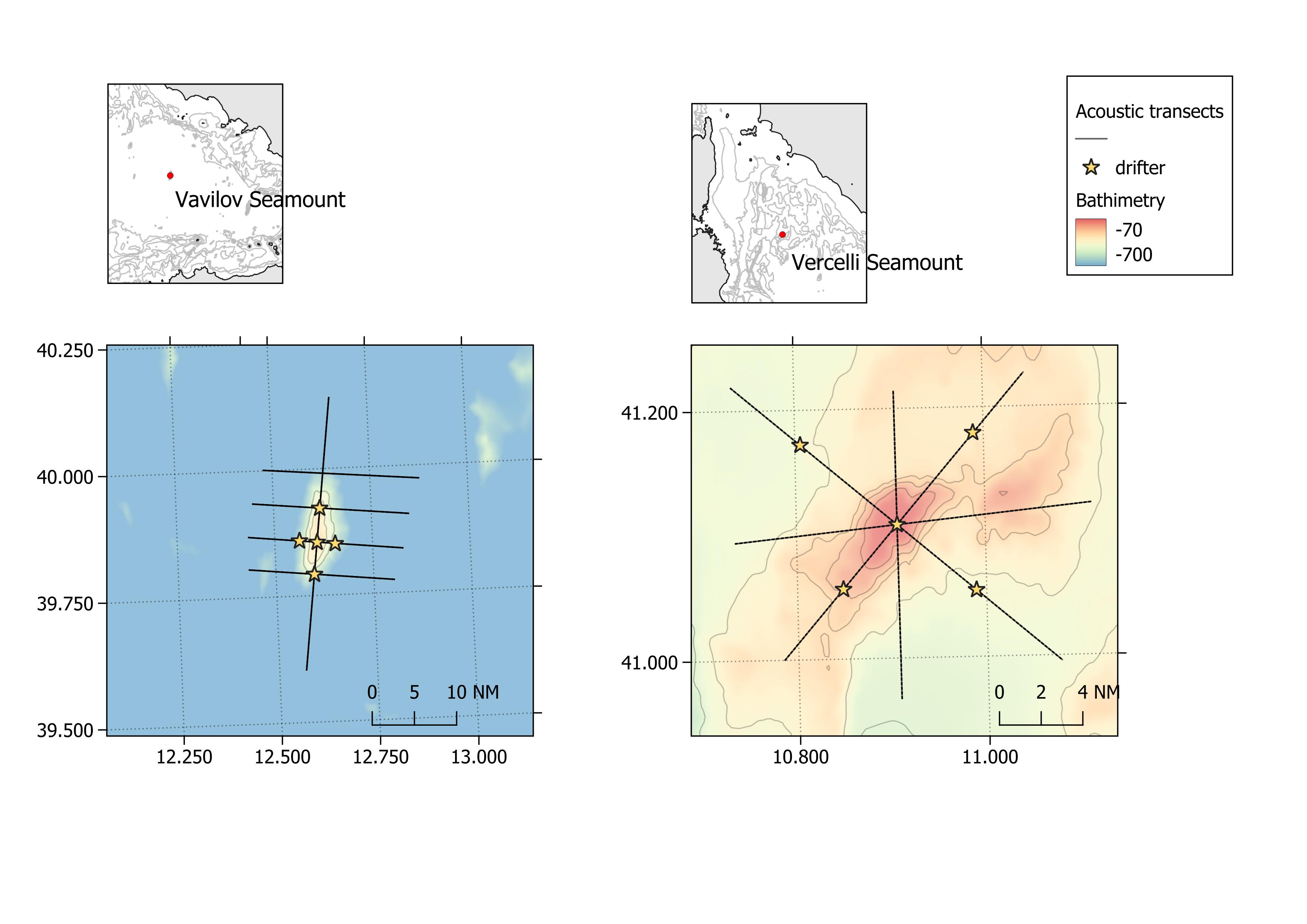
The PELASeam2 is an expedition designed to explore the pelagic ecosystem of 2 seamounts in the
Tyrrhenian Sea with different topographic and environmental characteristics.
The main goal will be to investigate and assess the pelagic productivity, biodiversity, and ecological roles of these important ecosystems by exploring different trophic levels, the underlying mechanisms of productivity using various and innovative methods including net sampling, eDNA, visual, and acoustic observations.
The results of this survey will help to better understand the unique features and potential ecological significance of the seamounts, providing valuable insights into their role in supporting marine life and contributing to the overall health of the marine ecosystem in the Tyrrhenian Sea
The main goal will be to investigate and assess the pelagic productivity, biodiversity, and ecological roles of these important ecosystems by exploring different trophic levels, the underlying mechanisms of productivity using various and innovative methods including net sampling, eDNA, visual, and acoustic observations.
The results of this survey will help to better understand the unique features and potential ecological significance of the seamounts, providing valuable insights into their role in supporting marine life and contributing to the overall health of the marine ecosystem in the Tyrrhenian Sea
Objectives
- Investigate the overall pelagic productivity of the Vavilov and Vercelli seamounts in the Tyrrhenian Sea exploring different trophic levels
- Investigate the spatial distribution, abundance and composition of fish early life stages over the 2 seamounts to understand if these habitats can act as spawning and/or nursery areas for the fish species distributed in these areas.
- Investigate the underlying mechanisms of the enhanced productivity detected over seamounts with different morphological characteristics, in particular testing whether pelagic productivity is supported by an increased primary production originated from local sources (e.g. through the formation of Taylor column) or from the influx of energy through the advection of zooplankton and micronekton from the surrounding areas.
- Evaluate the attractiveness of seamounts for the pelagic megafauna and top predators (large pelagics, marine mammals and sea birds). During the cruise we want to estimate the relative abundance and composition of megafauna assemblages at the seamounts in relationship with the overall pelagic productivity and environmental conditions detected in the study area using visual, camera, eDNA metabarcoding and acoustic observations.
- Investigate biodiversity of the pelagic communities on and around seamounts using net samples and eDNA metabarcoding: We want to answer to the following questions: 1) is eDNA a valuable tool to describe the pelagic biodiversity around seamounts and what is the difference with the traditional net sampling? (2) Is the pelagic biodiversity significantly different at the seamounts as opposed to the open ocean? 3) Is the species community at the seamounts generalist or more specialised to the seamounts ecosystems?